


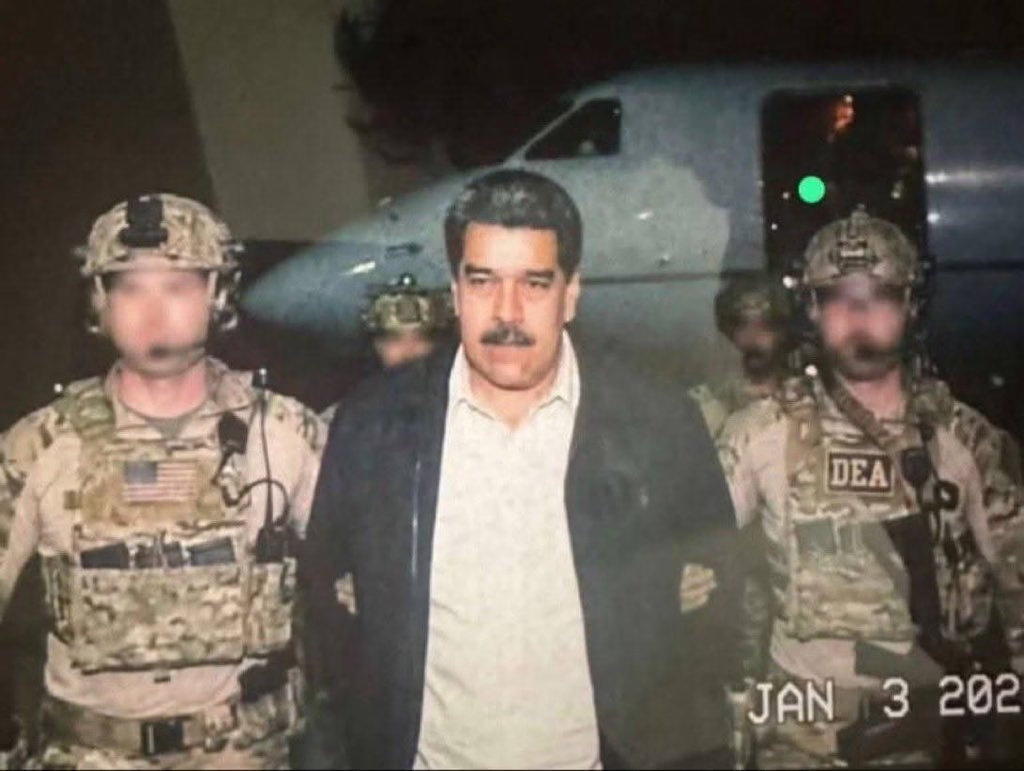
Caracas, Venezuela: In a dramatic escalation of tensions, the United States carried out a large-scale military operation in Venezuela on January 3, 2026, resulting in the capture of President Nicolás Maduro and First Lady Cilia Flores. The strike, which targeted multiple sites across Caracas and other regions, left at least 40 people dead, including both civilians and military personnel.
📰 Key Developments
- Airstrikes in Caracas and beyond: Explosions were reported at La Carlota airbase and Fuerte Tiuna, Venezuela’s largest military complex. Apartment buildings and civilian areas were also hit, causing widespread destruction.
- Casualties: Venezuelan officials confirmed dozens of deaths, including elderly residents and families caught in the blasts. Survivors described chaotic scenes as neighbors attempted rescues.
- Maduro’s capture: US forces removed Maduro and his wife from Venezuela. Attorney General Pam Bondi announced they face charges of “narco-terrorism” in the United States.
- Trump’s statement: President Donald Trump declared that the US would oversee Venezuela until a “safe and judicious transition” is possible, accusing Maduro of running a drug-trafficking cartel known as Cartel de los Soles.
- Regional reaction: Colombia reported strikes in multiple Venezuelan states, while neighboring governments expressed concern over the humanitarian fallout.
Venezuela’s Oil Reserve Context
- Scale of reserves: Venezuela’s reserves are estimated at 303 billion barrels, the largest globally, surpassing Saudi Arabia.
- Valuation: At current prices (~$57 per barrel), the reserves are worth $17.3 trillion, making them a critical geopolitical asset.
- Production challenges: Despite vast reserves, Venezuela’s crude output has collapsed over the past two decades due to nationalization, lack of foreign investment, and decaying infrastructure.
- US interest: Following Maduro’s capture, President Trump announced plans for US oil majors to invest billions to rebuild Venezuela’s oil sector. However, analysts caution that security risks, legal uncertainties, and instability will delay meaningful output.
Geopolitical Impact
- Global energy markets: Control over Venezuela’s reserves could reshape the global power map, influencing oil supply chains and pricing.
- Economic leverage: The US aims to use Venezuela’s oil wealth to stabilize the country and offset global energy shocks.
- Regional instability: Neighboring countries worry that oil exploitation under foreign oversight could fuel unrest and refugee flows.
Summary Table
| Aspect | Details |
|---|---|
| Proven Reserves | 303 billion barrels (largest globally) |
| Estimated Value | $17.3 trillion at $57/barrel |
| Current Output | Severely reduced due to mismanagement & lack of investment |
| US Strategy | Rebuild infrastructure via oil majors, billions in investment |
| Key Challenges | Security risks, legal disputes, political instability |
| Global Impact | Potential reshaping of energy markets, oil price volatility |
⚠️ Risks and Challenges
- Humanitarian crisis: Civilian casualties and infrastructure damage may worsen living conditions in already struggling communities.
- Regional instability: Neighboring countries fear spillover effects, including refugee flows and border tensions.
- Uncertain transition: With Maduro removed, questions remain about who will govern Venezuela and how power will be transferred.
In summary: The US strike on Venezuela has reshaped the nation’s political landscape overnight, removing its long-serving president while igniting humanitarian and economic concerns. The coming weeks will determine whether this intervention leads to stability or deeper turmoil.

