
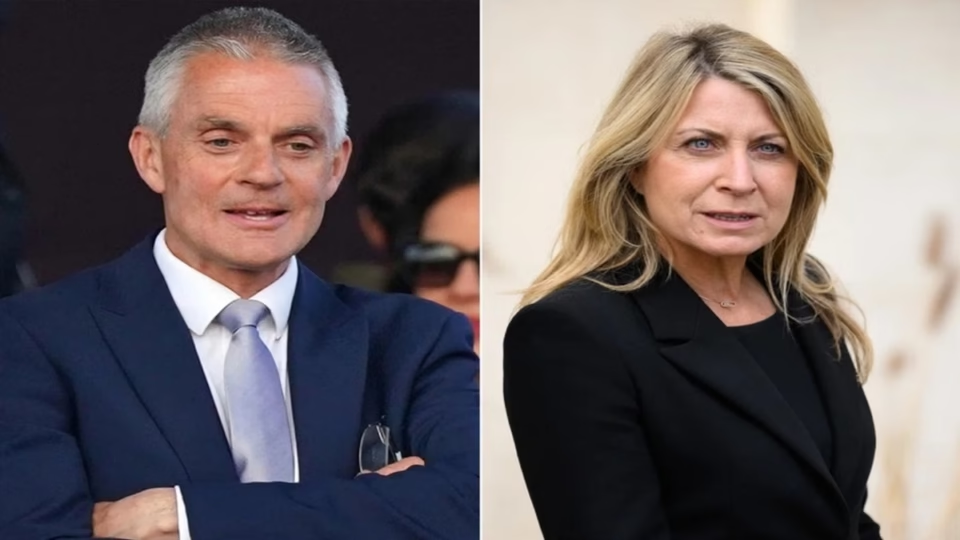
In a dramatic development in the British media landscape, BBC Director-General Tim Davie has tendered his resignation following a wave of criticism surrounding the broadcaster’s handling of a controversial speech by Donald Trump and broader allegations of editorial bias.
Background & controversy
The resignation comes in the wake of a leaked memo from the BBC’s editorial‐standards committee highlighting that a programme had edited a speech by former President Trump in a way deemed misleading, sparking accusations of political and ideological bias within the publicly-funded broadcaster. The incident triggered intense criticism from UK right-wing media and political figures, with claims that the BBC had veered away from impartiality.
Conservative-leaning voices labelled the move “a great day for British broadcasting,” while some internal staff and critics labelled Davie’s leadership “rotten” and “poisoning the well” of journalism.
Resignation & reaction
In his departure statement, Davie acknowledged that “some mistakes were made” under his watch, although he did not accept personal blame for the broader editorial failures. he BBC’s head of news, Deborah Turness, is also stepping down. Within hours of the announcement, former BBC critics and media analysts weighed in, calling for sweeping reforms to restore trust and credibility.
Nigel Farage, leader of the party Reform UK, a vocal critic of the BBC, hailed the news as a turning point, declaring that if the organisation doesn’t now “get this right” there will be massive public resistance to paying the licence fee.
Implications for the broadcaster & British media
The BBC is Britain’s cornerstone public broadcaster — funded by the licence fee, bound by Royal Charter, and expected to maintain strict impartiality. Yet, this lowest-moment in its managerial leadership raises serious questions: how effectively can it police itself, how well is it insulated from political pressure, and how credible is it in the eyes of an increasingly sceptical audience?
For staff and producers, morale is likely shaken. The perception of bias, whether left- or right-leaning, risks alienating large swathes of the British public. Will the broadcaster’s governance and editorial processes be overhauled? Key questions include who will replace Davie, what next steps will be taken to rebuild trust, and how quickly will reforms be implemented.
The broader climate of media trust
This event occurs against a backdrop of declining trust in traditional news media, both in the UK and globally. Polls show younger audiences are increasingly turning away from legacy broadcasters, seeking alternative platforms. For the BBC, the crisis isn’t just managerial—it’s existential. If it fails to navigate this correctly, the broadcaster may face reduced licence-fee support, legislative scrutiny, or even structural change.
What comes next
A transition period is now underway. The BBC’s board must appoint an interim leader or successor. They will likely initiate an internal review of editorial standards, transparency mechanisms and governance structures. Public consultations may follow. The government and parliament may also weigh in, given the broadcaster’s public funding and its role in national life.
Competitors and digital news platforms will watch closely. The BBC’s ability to bounce back will set the tone for public broadcasting around the world: can a national broadcaster recover from accusations of bias and institutional failure?
Why it matters
For everyday viewers, the BBC’s credibility affects how news, documentaries and current-affairs programmes are received. If audiences distrust the broadcaster, it weakens the social fabric of informed debate. In the age of deep-fakes, filter bubbles and social media echo chambers, an impartial public broadcaster is more essential than ever. The fallout from Davie’s resignation could provoke a reckoning for public media institutions globally.