

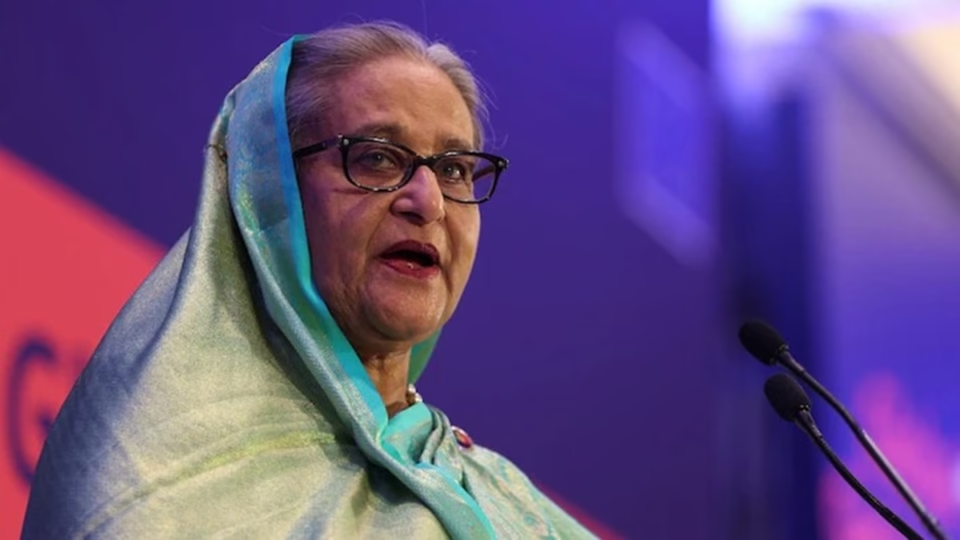
Dhaka, Bangladesh : In a landmark ruling, Bangladesh’s International Crimes Tribunal (ICT) has sentenced former Prime Minister Sheikh Hasina to death in absentia. The verdict stems from her alleged role in ordering a violent crackdown on student-led protests that erupted in July 2024 and ultimately led to the collapse of her government.
The tribunal found Hasina guilty of crimes against humanity, citing her directive to use lethal force against demonstrators protesting a controversial quota system in public-sector jobs. The unrest, which escalated into a nationwide movement, culminated in her ouster in August 2024.
Hasina, currently in exile in India, did not attend the trial. She has publicly condemned the judgment, calling it a politically motivated attempt to silence opposition voices. The 453-page ruling was delivered on Monday after months of hearings, with prosecutors labeling her the “mastermind” behind the state violence.
The ICT, originally established under Hasina’s own administration in 2009 to investigate war crimes, now finds itself at the center of a political storm. The verdict raises questions about judicial impartiality, political vendetta, and Bangladesh’s future as it approaches general elections in early 2026.
Key Developments:
- Sheikh Hasina convicted of crimes against humanity for her role in the 2024 crackdown.
- Sentenced to death in absentia; remains in India.
- Verdict delivered by the ICT after a 453-page judgment.
- Hasina denounces the ruling as politically driven.
- Bangladesh seeks her extradition amid rising political tensions.
This ruling marks one of the most dramatic legal actions against a Bangladeshi leader in recent history and could reshape the nation’s political landscape in the months ahead.