

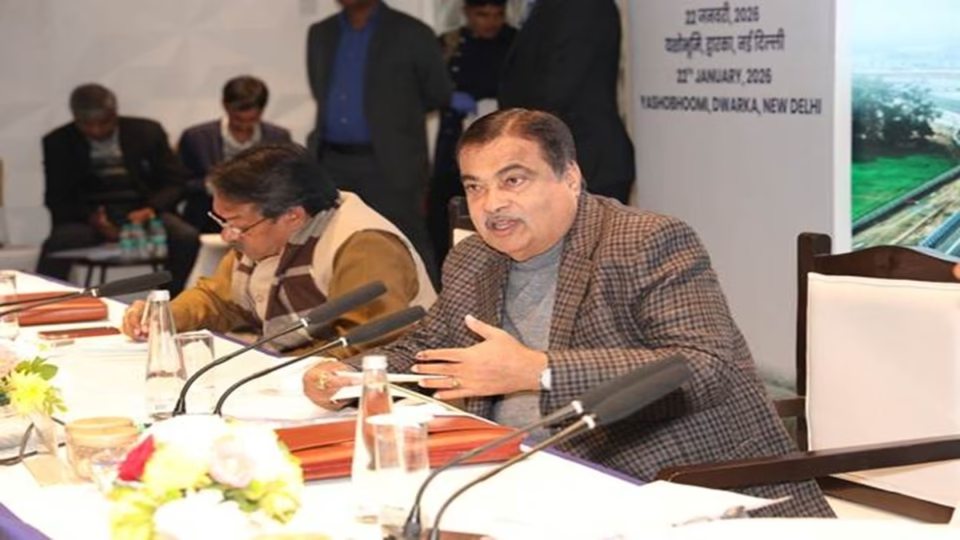
New Delhi : The Consultative Committee of the Ministry of Road Transport and Highways (MoRTH) convened under the leadership of Union Minister Nitin Gadkari to deliberate on one of India’s most pressing concerns—road safety. The meeting, attended by Ministers of State Harsh Malhotra and Ajay Tamta, placed strong emphasis on strategies to reduce road accidents and fatalities across the country.
Focus on Reducing Accidents and Fatalities
The central theme of the discussion was “Measures for Reduction in Road Accidents and Fatalities.” Officials underscored the need for a multi‑pronged, coordinated approach that combines infrastructure improvements, stricter enforcement, public awareness campaigns, and emergency response systems.
The Chairman of the National Highways Authority of India (NHAI) briefed members on ongoing initiatives aimed at enhancing safety standards on national highways. This was followed by a detailed presentation from the Additional Secretary (Transport), who outlined progress under the four pillars of road safety—Engineering, Enforcement, Education, and Emergency Care. The presentation highlighted achievements to date, persistent challenges, and the importance of introducing new interventions alongside strengthening existing measures.
The Secretary, Road Transport & Highways, also informed the Committee about the Ministry’s collaboration with IIT Kanpur to develop AI‑enabled road safety technologies, signaling a push towards innovation in accident prevention.
Concerns Raised by Committee Members
While acknowledging the Ministry’s efforts, members expressed concern over the high number of accidents and fatalities that continue to plague Indian roads. They stressed the need for a comprehensive national strategy that integrates engineering upgrades, better awareness among road users, and effective enforcement mechanisms.
Key issues raised included:
- Rectification of black spots on highways.
- Widening of select stretches of national highways.
- Availability of trauma care facilities along major routes.
- Enhanced compensation for accident victims.
- Improved road maintenance and repair mechanisms.
- Stronger coordination with state governments for state highway safety.
Members also flagged irregularities in the conduct of Members of Parliament Road Safety Committee (MPRSC) meetings at the district level, poor road markings, and substandard signage and reflectors. Suggestions included identifying landslide‑prone areas similar to black spots, integrating road safety into school curricula, establishing a Centre for Road Safety, and ensuring at least one trauma centre in every district.
Minister’s Response and New Initiatives
Responding to these concerns, Minister Gadkari announced that the Department of Telecommunications has allocated 30 GHz radio frequency for the development of vehicle‑to‑vehicle communication systems, a technology expected to significantly reduce accidents and fatalities.
He urged members to encourage state authorities to conduct regular MPRSC meetings with participation from district collectors, police, public works departments, and other agencies. Gadkari further directed regional officers and project directors of MoRTH and NHAI to attend these meetings consistently and incorporate road safety considerations into ongoing projects.
The Minister also confirmed that AI‑based road safety applications would be shared with states and union territories, and requested members to submit detailed notes on their concerns and suggestions for further review.
Road Safety Anthem and Public Awareness
In a symbolic gesture, Gadkari showcased the Road Safety Anthem, which has been translated into 22 regional languages. He appealed to Members of Parliament to promote the anthem in schools, public gatherings, and community events, reinforcing the importance of road safety awareness at the grassroots level.
Commitment to Safer Roads
Concluding the meeting, Gadkari motivated officers to continue their dedicated efforts toward building safer road infrastructure. He reiterated the government’s commitment to saving lives on Indian roads, emphasizing that road safety is not just a policy priority but a moral responsibility.
Key Takeaways
- Multi‑pronged strategy: Engineering, enforcement, education, and emergency care remain the four pillars.
- Technology push: AI‑enabled safety tools and vehicle‑to‑vehicle communication systems are being developed.
- Public awareness: Road Safety Anthem in 22 languages to be promoted nationwide.
- Infrastructure focus: Black spot rectification, trauma centres, and better road markings highlighted as urgent needs.

