
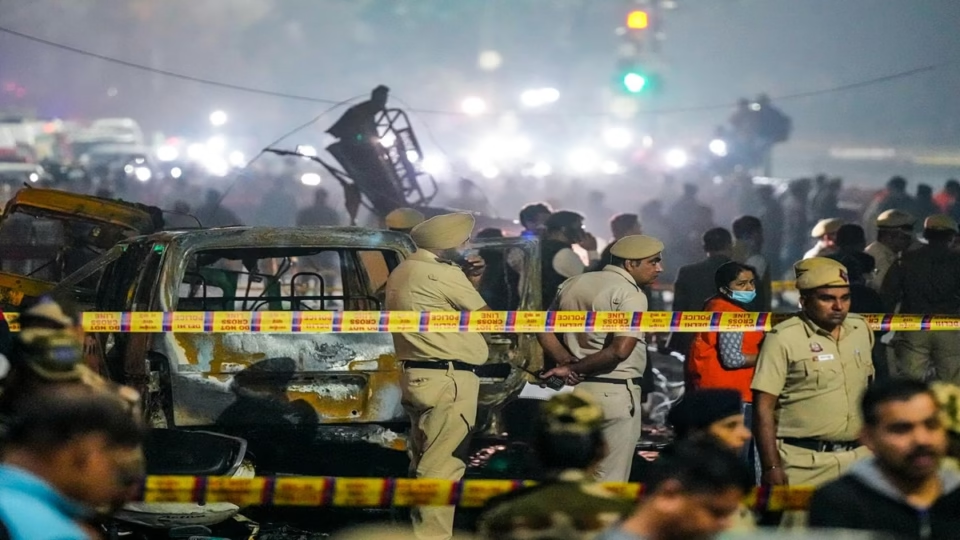
New Delhi : On November 10, 2025, a car explosion near the Red Fort Metro Station shook Old Delhi, killing at least 15 people including the suicide attacker, and injuring several others. The attack was carried out using an improvised explosive device (IED) concealed in a vehicle, detonated during peak evening hours. The incident sent shockwaves across the capital, raising urgent questions about security lapses and the sophistication of the terror network involved.
Emerging Details of the Investigation
Indian intelligence agencies and the National Investigation Agency (NIA) have pieced together a complex web of suspects:
- Foreign Handlers Identified: Investigators suspect one handler, Dr. Ukasha, to be operating from Pachir Wa Agam district in Nangarhar province, Afghanistan, a region historically linked to hardened jihadist networks. Another suspected handler, Faisal, is believed to have ties with Pakistan’s Inter-Services Intelligence (ISI).
- Local Module: The attack was allegedly executed by a small but highly skilled terror cell comprising Kashmiri doctors and professionals, who were guided remotely by these foreign handlers.
- Funding Network: Reports suggest the accused raised nearly ₹26 lakh over two years, pooling resources to purchase chemicals, fertilizers, and remote-triggering devices. This financial trail has become a crucial lead in the investigation.
- Recent Arrests: Authorities detained Tufail Ahmed, an electrician from Pulwama, for suspected involvement. His arrest follows warrants against other accused, including Dr. Muzaffar Ahmad Rather, who reportedly fled India earlier.
ISI’s Alleged Role
Investigators believe the attack bears hallmarks of ISI “tradecraft”, pointing to external handlers orchestrating operations through encrypted communication and digital safehouses. Intelligence sources suggest that the Pakistani agency may have provided strategic guidance, while Afghan-based operatives offered logistical support
Broader Security Concerns
The suspected involvement of handlers across borders underscores the transnational nature of modern terror networks. Key concerns include:
- Digital Coordination: Use of encrypted apps and remote guidance makes detection harder.
- Professional Recruitment: The involvement of educated professionals, including doctors, reflects a shift toward “white-collar terror modules.”
- Regional Instability: Afghanistan’s Nangarhar province, long associated with extremist groups, continues to serve as a hub for cross-border operations.
Government Response
The Indian government has tightened security around key landmarks and intensified crackdowns in Jammu & Kashmir. Agencies are coordinating with international partners to track suspects abroad and are considering Interpol notices for fugitives linked to the case.
Conclusion
The Red Fort blast investigation reveals a sophisticated terror plot with suspected handlers in Afghanistan and Pakistan’s ISI, executed by a network of educated professionals in India. The findings highlight the evolving nature of terrorism—where cross-border coordination, digital anonymity, and professional recruits pose new challenges for national security.