

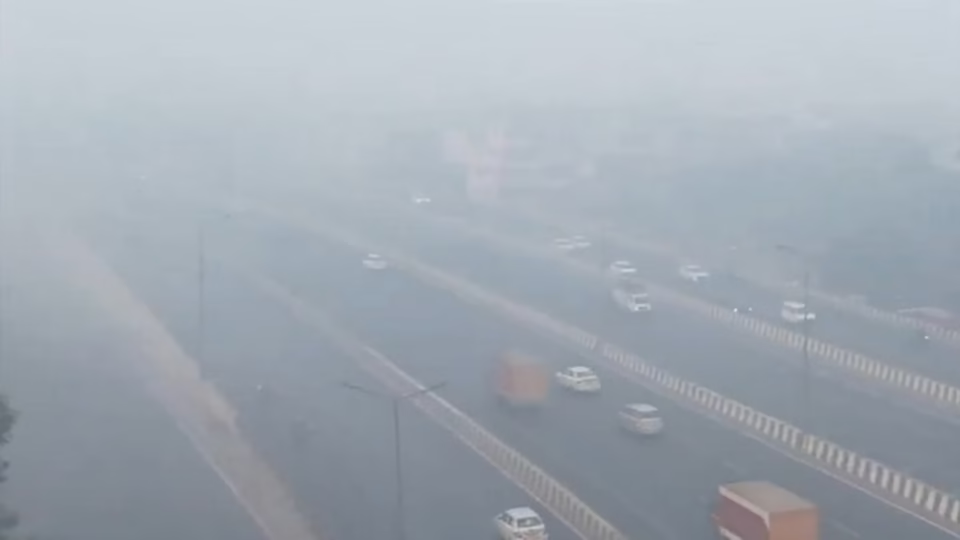
New Delhi : New Delhi woke up on Monday to another day of hazardous air pollution, with the Air Quality Index (AQI) crossing 420–430 in multiple monitoring stations across the city. The Central Pollution Control Board (CPCB) confirmed that the capital’s overall AQI stood firmly in the severe category, marking one of the worst pollution spells of this winter season.
The Numbers Behind the Crisis
- Overall AQI: 427 at 8 a.m., according to CPCB data.
- Hotspots: Anand Vihar recorded 493, Wazirpur touched 500, and Jahangirpuri crossed 430.
- Classification: AQI between 401–500 is considered severe, meaning the air is hazardous for all residents, not just vulnerable groups.
This level of pollution is equivalent to smoking multiple cigarettes a day, according to health experts, and can cause immediate respiratory distress even in healthy individuals.
Smog Blanket Over the Capital
Residents reported dense smog reducing visibility to less than 100 meters in some areas. Landmarks such as Kartavya Path, Akshardham, and AIIMS were shrouded in a grey haze. Flight delays and traffic snarls added to the chaos, as commuters struggled through the toxic air.
Government Response
The Delhi government announced emergency measures:
- Schools: Classes up to grade 5 have been shifted online until further notice.
- Outdoor activities: Sports and public events have been suspended.
- GRAP Stage IV curbs: Construction bans, restrictions on diesel generators, and limits on truck entry into the city were reimposed.
Officials stressed that these steps are temporary but necessary to protect public health.
Health Impact
Doctors across Delhi reported a surge in patients complaining of cough, wheezing, eye irritation, and breathlessness. Hospitals have advised residents to:
- Stay indoors as much as possible.
- Use N95 masks when venturing outside.
- Avoid strenuous outdoor exercise.
Children, the elderly, and those with asthma or heart conditions are at the highest risk. Experts warn that prolonged exposure to AQI levels above 400 can lead to long‑term damage to lungs, heart, and even cognitive function.
Why Is Delhi’s Air So Bad?
Several factors converge to push Delhi’s air into the severe zone each winter:
- Weather: Cold temperatures and low wind speeds trap pollutants close to the ground.
- Vehicular emissions: Delhi’s 12 million vehicles contribute heavily to nitrogen oxides and particulate matter.
- Construction dust: Despite bans, dust from ongoing projects continues to add to PM2.5 levels.
- Crop burning: Residue burning in Punjab and Haryana adds seasonal spikes, though this year’s contribution was reportedly lower.
- Local sources: Road dust, industrial emissions, and household burning of biomass worsen the mix.
Public Anger and Frustration
Residents expressed outrage on social media, with many questioning why decades of promises have failed to clean Delhi’s air. The chants of “AQI, AQI” during Lionel Messi’s recent visit to Delhi highlighted how pollution has become a defining issue for the city’s global image.
Judicial Intervention
The Supreme Court of India is scheduled to hear a plea on worsening Delhi‑NCR air quality on December 17, reflecting growing judicial concern. The Court has previously directed governments to enforce stricter measures under the Graded Response Action Plan (GRAP).
Regional Impact
It’s not just Delhi. Neighboring cities such as Noida, Greater Noida, Bahadurgarh, and Baghpat also reported AQI levels in the severe category. The toxic haze has effectively blanketed the entire National Capital Region (NCR), affecting millions of residents.
The Way Forward
Experts argue that short‑term bans and emergency measures are not enough. Long‑term solutions must include:
- Transition to cleaner fuels and electric vehicles.
- Stricter enforcement of construction dust control.
- Regional cooperation to tackle crop residue burning.
- Expansion of green cover and urban forests.
- Public awareness campaigns to reduce household emissions.
Without systemic change, Delhi risks repeating this cycle of toxic winters year after year.
Conclusion
Delhi’s current AQI readings of 420–430 in several areas underscore the severity of its pollution crisis. The smog is not just an environmental issue but a public health emergency, affecting millions of lives daily. While emergency measures provide temporary relief, experts warn that only sustained, structural reforms can prevent the capital from choking every winter.

