

New Delhi, India :
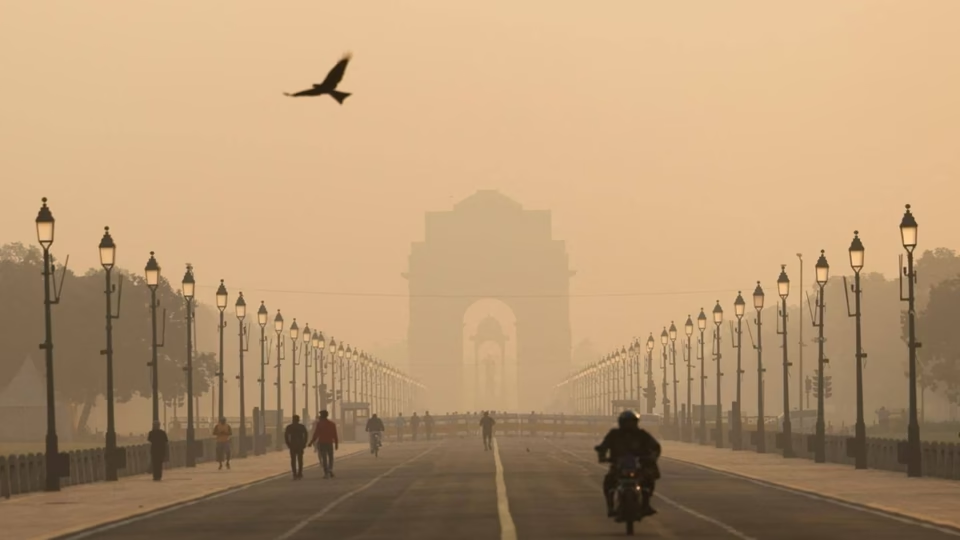
Delhi woke to a thick, grey pall of smog on Sunday as air quality deteriorated sharply across the capital and neighbouring NCR districts, pushing many monitoring stations into the “severe” category and forcing health advisories for large sections of the population.
Early-morning readings showed the citywide 24-hour average AQI had surged, with multiple stations reporting levels above 400 and localized pockets registering the season’s highest spikes. Wazirpur, Bawana and Vivek Vihar were among the worst-affected locations, while major central corridors such as India Gate, Lodhi Road and the AIIMS area were shrouded in haze that reduced visibility and altered daily life for commuters and outdoor workers.
The immediate public-health response focused on protecting groups most vulnerable to poor air — children, the elderly and those with respiratory or cardiac conditions. Hospitals and clinics reported an uptick in patients presenting with breathing difficulties, cough and eye irritation, while school administrators debated staggered timings or temporary closures for outdoor activities. Local authorities urged residents to minimize outdoor exposure, use N95 or equivalent masks when outside and run air purifiers at home where available; traffic enforcement teams and municipal bodies mobilized to monitor dust-control measures and street-level emissions.
Meteorology and emissions both contributed to the crisis. A combination of calm winds, a shallow inversion layer and cooler night-time temperatures trapped pollutants near ground level, while seasonal increases in combustion-related emissions — including vehicular exhaust, industrial activity and biomass burning in surrounding regions — intensified concentrations of PM2.5 and PM10. Satellite and ground-sensor data showed the pollution plume had both local sources and transboundary contributions from nearby agricultural burning pockets and construction dust, complicating mitigation efforts that rely on immediate local action.
Policy-makers and air-quality managers reiterated that short-term advisories are necessary but insufficient. Officials pointed to the need for sustained interventions: stricter vehicular-emission checks, accelerated adoption of electric public transport, enforcement of dust-control norms on construction sites, and incentives to prevent stubble burning in neighbouring states. They also stressed the importance of layered community measures such as establishing clean-air shelters in schools and workplaces, expanding distribution of certified masks, and improving public messaging so vulnerable populations can take preventive steps on high-pollution days.
For residents, the smog’s effects are tangible: reduced outdoor activity, discomfort during commutes, and concern about longer-term respiratory impacts if severe episodes recur. Experts urged routine health precautions — limiting strenuous outdoor exercise during high-AQI hours, ensuring indoor spaces are sealed during peak smog, and consulting physicians if symptoms escalate — while advocating for broader, persistent policy shifts to reduce emissions at source and improve urban resilience to pollution episodes.
The autumn-to-winter transition in Delhi commonly brings such spikes; yet the intensity of this episode renewed calls for year-round strategic planning. Urban planners and public-health advocates recommended combining crisis response with long-term investments: rapid scale-up of air-monitoring networks, green-cover initiatives tailored to local microclimates, incentivised retrofitting of household and municipal heating systems to cleaner fuels, and cross-state coordination to prevent agricultural burning during critical meteorological windows. As the capital waits for winds or rain to provide relief, the episode underscores that short-term relief must be matched by structural change if Delhi is to avoid repeated health shocks each season.