

Lucknow, Uttar Pradesh :
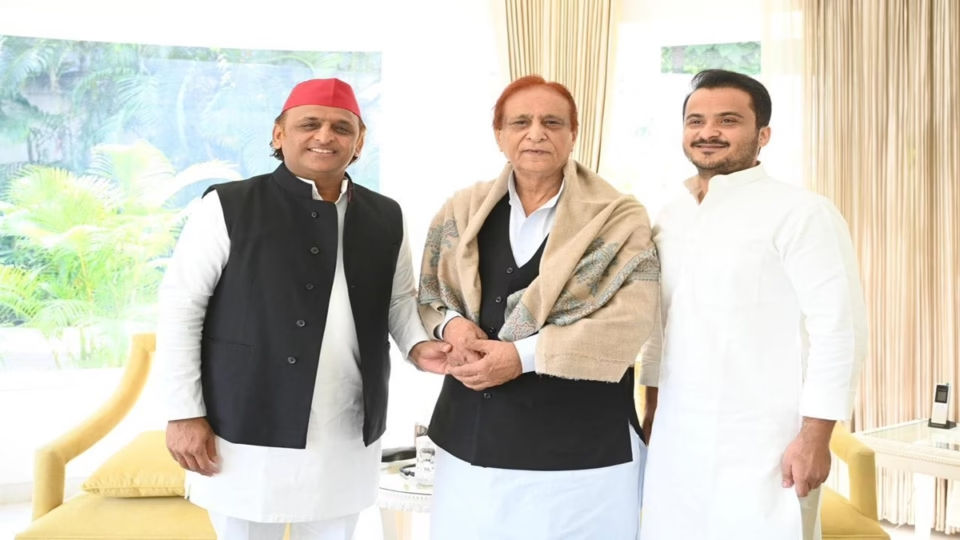
Azam Khan’s recent visit to Lucknow and his private meeting with Samajwadi Party president Akhilesh Yadav has generated significant political discussion, seen by observers as a symbolic moment for party cohesion and an attempt to project resilience amid ongoing political and legal turbulence. The encounter, described by both leaders as warm and reflective, was brief yet charged with symbolism: photos and statements released after the meeting emphasised camaraderie, shared history, and a renewed focus on unity ahead of an active political calendar. For a party navigating factional pressures and the complexities of local contests, such gestures serve both internal morale and external signalling.
Azam Khan, a longstanding and often controversial figure in Uttar Pradesh politics, has in recent times been at the centre of legal battles and political battles that strained ties with the party’s leadership. His return to a public, friendly engagement with Akhilesh suggests a deliberate effort to reassert his place within SP’s broader narrative and to highlight themes of resilience, injustice, and the party’s commitment to its supporters. Khan’s public remarks after the meeting underscored these themes, as he spoke about perceived injustices faced by him and his followers and expressed faith in legal remedies and party solidarity. For many supporters, his visible reconciliation with the party chief offers reassurance that old bonds persist and that the SP can present a united front.
From Akhilesh Yadav’s perspective, welcoming Azam Khan back into the fold-at least publicly-signals political pragmatism. The SP’s leadership is acutely aware of electoral arithmetic in Uttar Pradesh, where alliances, local leadership, and vote-bank consolidation matter deeply. A reconciliatory posture aims to prevent splintering that could erode the party’s strength in crucial constituencies. Akhilesh’s public messaging after the meeting—recalling shared memories and stressing the party’s collective heritage—was carefully calibrated to project stability and to dampen speculation about rifts.
Political analysts note that such reunions often serve multiple functions: managing dissent, mobilising core supporters, and shaping media narratives in a way that shifts attention from negative headlines. For opposition parties, maintaining an image of internal unity ahead of elections is especially valuable; it helps attract undecided voters and reassures grassroots cadres. Azam Khan’s presence, therefore, is not just personal but strategic: he remains a figure with local influence and symbolic weight in certain regions of the state.
However, observers also caution that public optics don’t always translate to substantive policy alignment. The depth and durability of any reconciliation will depend on behind-the-scenes negotiations, candidate selection decisions, and how the party manages legal and administrative pressures facing key leaders. The coming weeks will reveal whether this meeting yields operational collaboration-such as joint campaign appearances, seat-sharing arrangements, or coordinated messaging-or whether it remains a temporary truce for the cameras.
For the SP rank-and-file, the message is clear: unity is being publicly prioritised. For opponents, the visit is a reminder that the SP remains a dynamic force willing to manage internal tensions for electoral advantage. For voters, especially in constituencies where Azam Khan has influence, the meeting may reinvigorate local support networks and reshape contest strategies. Ultimately, whether this episode marks the start of durable reconciliation or a short-lived media moment will hinge on how leaders translate symbolism into sustained organisational work on the ground.