

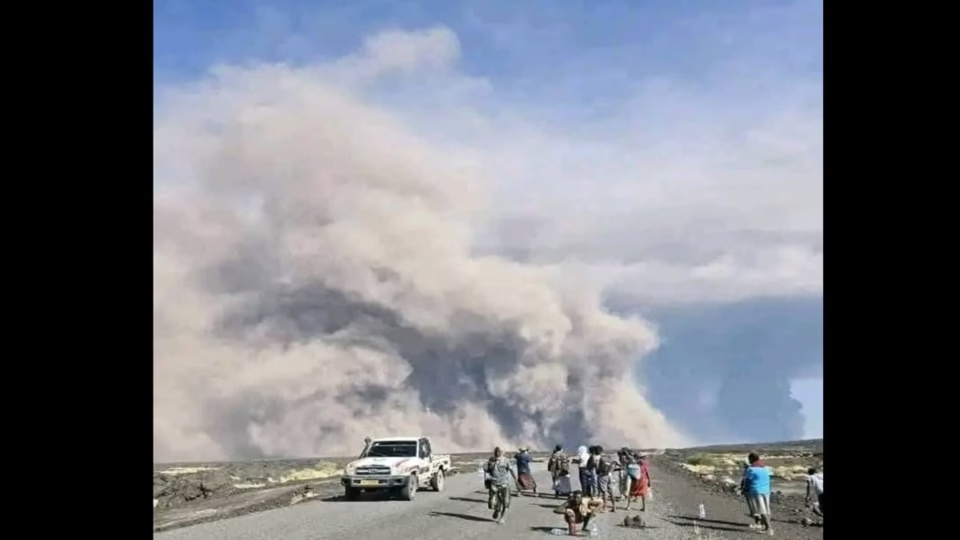
New Delhi : The India Meteorological Department (IMD) has confirmed that the volcanic ash cloud currently hovering over Delhi and parts of northern India will move out of the country by 7 PM today, drifting eastward towards China.
Origin of the Ash Cloud
The ash originated from the Hayli Gubbi volcano in northern Ethiopia, which erupted after nearly 12,000 years of dormancy. Carried by strong winds across the Arabian Sea, the cloud first reached Gujarat late last night before spreading to Rajasthan, Punjab, Haryana, and Delhi around midnight. It is now passing through Uttar Pradesh and Bihar on its way out of India.
Altitude and Impact
- Altitude: 8–15 km above sea level
- Wind speed: 150 km/h
- Effect on air quality: No additional impact on Delhi’s already “very poor” AQI
IMD Director General Mrutyunjay Mohapatra reassured residents that there is no cause for panic, noting that no public advisory has been issued. However, a special advisory has been circulated for airlines due to potential risks for aircraft flying through ash‑affected zones.
Disruption to Flight Operations
The ash cloud has already disrupted 19 international flights today:
- 7 cancellations (including Newark–Delhi, New York–Delhi, Dubai–Hyderabad, Doha–Mumbai, Dubai–Chennai, Dammam–Mumbai, Doha–Delhi)
- 12 delays across major routes
The Directorate General of Civil Aviation (DGCA) has instructed airlines to avoid ash‑affected flight levels, adjust routing and fuel planning, and immediately report any suspected encounters with volcanic ash, such as engine anomalies or cabin smoke.
Airlines Respond
- Air India expressed regret over cancellations, emphasizing that passenger safety remains its top priority.
- IndiGo assured travelers it is fully prepared with precautionary measures and is closely coordinating with international aviation bodies.
- SpiceJet also reported operational impact due to the ash cloud.
Key Takeaway
While the volcanic ash has caused temporary disruption to air travel, experts confirm it poses no threat to public health or Delhi’s pollution levels. The situation is expected to normalize once the ash cloud exits Indian airspace later this evening.