
New Delhi : Delhi continues to battle toxic air, with pollution levels remaining in the “very poor” to “severe” category despite emergency measures under the Graded Response Action Plan (GRAP).
Current Situation
On November 23, 2025, the Air Quality Index (AQI) across Delhi averaged 381, firmly in the very poor category, according to the Central Pollution Control Board (CPCB). Some monitoring stations reported even worse conditions:
- Bawana recorded AQI levels of 435, classified as severe.
- Anand Vihar and RK Puram also reported toxic smog with AQI readings above 400.
- The lowest AQI was noted at NSIT Dwarka, still at 313, which falls under very poor.
This means residents across the capital are breathing air laden with fine particulate matter (PM2.5 and PM10), far exceeding safe limits.
Weather and Seasonal Factors
Delhi’s pollution crisis is compounded by winter weather conditions:
- Temperature inversion traps pollutants close to the ground.
- Low wind speeds prevent dispersion of smog.
- High humidity (86%) worsens the haze, making the toxic layer more persistent.
- The city also recorded 14°C minimum temperature, slightly above seasonal averages, but the cold air still contributes to pollutant entrapment.
Measures in Place
Authorities have already enforced GRAP-IV restrictions, the strictest stage of Delhi’s pollution control plan:
- Ban on construction and demolition activities.
- Restrictions on entry of heavy vehicles into the city.
- Closure of stone crushers, brick kilns, and hot-mix plants.
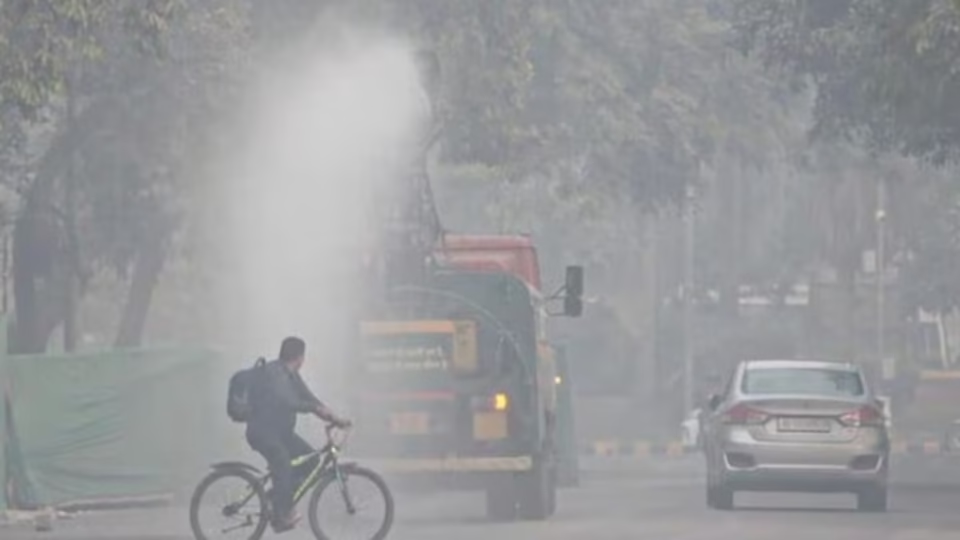
- Intensified road cleaning and water sprinkling to reduce dust.
Despite these steps, smog continues to blanket Delhi, showing little improvement in AQI levels.
Health Concerns
Medical experts warn that prolonged exposure to such toxic air can cause:
- Respiratory illnesses like asthma, bronchitis, and COPD flare-ups.
- Cardiovascular risks, including hypertension and heart disease.
- Eye and throat irritation, headaches, and reduced lung function. Children, the elderly, and those with pre-existing conditions remain the most vulnerable.
Public Advisory
Residents are being urged to:
- Limit outdoor activities, especially early morning and late evening.
- Use N95 masks when stepping outside.
- Keep indoor air purifiers running where possible.
- Stay hydrated and avoid strenuous outdoor exercise.
Conclusion
Delhi’s toxic air crisis underscores the limits of emergency measures when structural pollution sources—vehicular emissions, crop residue burning, and industrial activity—remain unchecked. With AQI readings hovering between very poor and severe, the capital faces yet another grim winter of hazardous air, demanding stronger long-term solutions.