
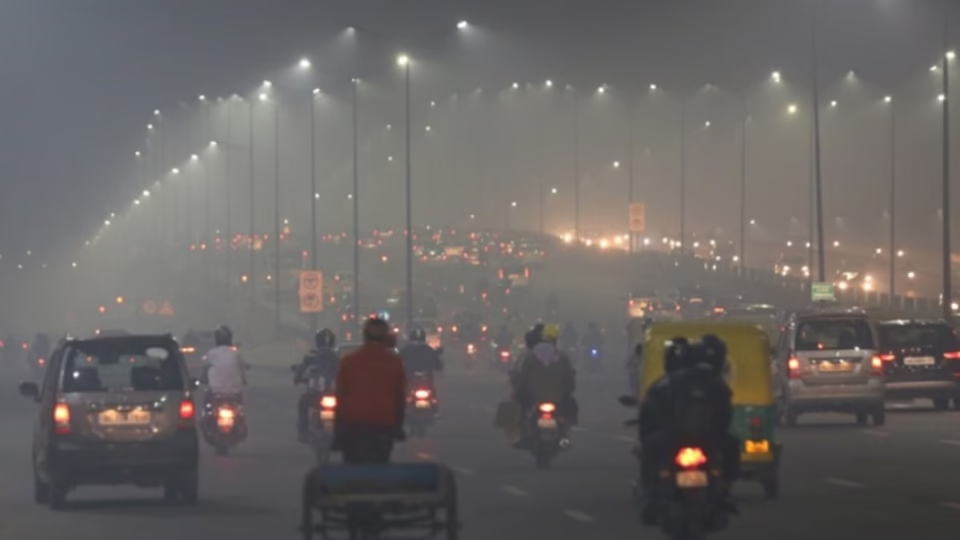
New Delhi : Delhi continues to battle hazardous air conditions, with the city’s Air Quality Index (AQI) staying in the “very poor” range for the ninth straight day. Several monitoring stations even reported levels edging into the “severe” category, raising concerns for public health.
Current AQI Levels
- The 24‑hour average AQI stood at 359, according to the Central Pollution Control Board (CPCB).
- Areas such as ITO, Akshardham, Mundka, Bawana, and Jahangirpuri recorded AQI readings above 400, classified as “severe.”
- Residents reported dense smog across the city, reducing visibility and worsening respiratory discomfort.
Causes of Pollution - Vehicular emissions, industrial activity, and farm fires in neighbouring states remain major contributors.
- Weather conditions—including low wind speed and dropping temperatures—are trapping pollutants close to the ground.
Health Concerns
- Experts warn that prolonged exposure to “very poor” air quality can cause breathing difficulties, asthma flare‑ups, and cardiovascular stress.
- At “severe” levels, even healthy individuals may experience adverse effects.
Government & Expert Response
- The Air Quality Early Warning System predicts little improvement in the coming days.
- Authorities are focusing on dust control, stricter vehicle checks, and curbing industrial emissions.
- Meteorologists say only strong winds or rainfall could bring temporary relief.
Outlook
November has already seen 16 out of 21 days with air quality in the “very poor” category. With winter setting in, pollution levels are expected to worsen unless stricter measures are enforced.