

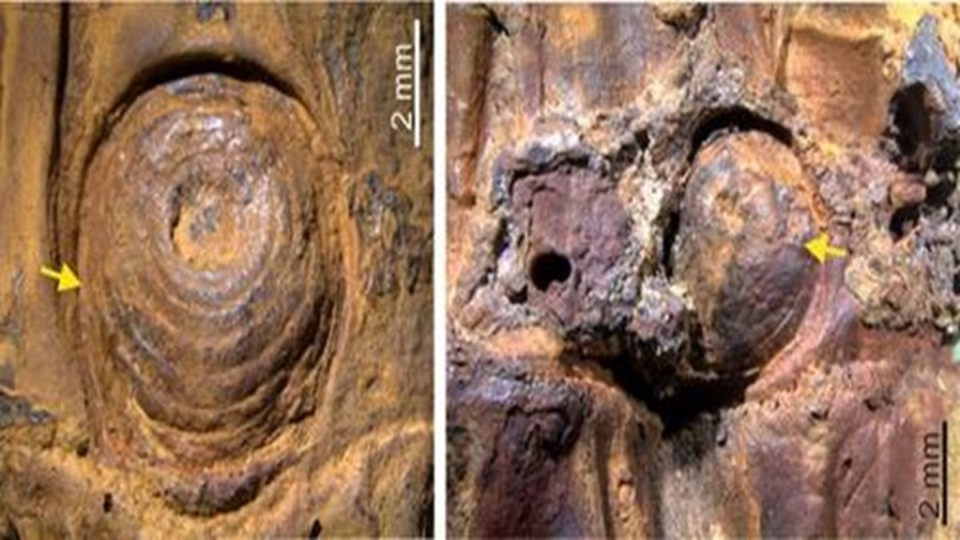
Imphal Valley, Manipur: In a groundbreaking discovery, researchers have unearthed a remarkably preserved 37,000-year-old bamboo fossil from the silt-rich deposits of the Chirang River in Manipur. The specimen, carrying distinct thorn scars, is the earliest evidence of thorny bamboo found in Asia and offers new insights into the continent’s botanical and climatic history.
Rare Fossil Discovery
Bamboo fossils are exceptionally rare due to the plant’s hollow stems and fibrous tissues, which typically decay without leaving traces in the geological record. Scientists from the Birbal Sahni Institute of Palaeosciences (BSIP), under the Department of Science and Technology (DST), identified the fossil during field surveys in the Imphal Valley.
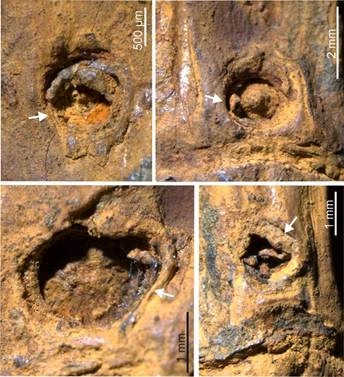
Detailed laboratory analysis confirmed the markings as thorn scars, leading researchers to classify the specimen under the genus Chimonobambusa. Comparisons with modern thorny species such as Bambusa bambos and Chimonobambusa callosa helped reconstruct its defensive traits and ecological role.
Ice Age Significance
The fossil provides the first evidence that thorniness in bamboo—a natural defense against herbivores—existed in Asia during the Ice Age. Its preservation is particularly significant because bamboo disappeared from many regions, including Europe, during colder and drier climatic phases. The finding suggests that Northeast India acted as a refuge, allowing bamboo to survive and thrive despite global environmental stress.
Biodiversity Hotspot
Published in the journal Review of Palaeobotany and Palynology, the study highlights the Indo-Burma biodiversity hotspot as a crucial sanctuary during the Ice Age. While harsher climates eliminated bamboo elsewhere, the warm and humid conditions of Northeast India sustained its growth.
Contribution to Science
The research team—H. Bhatia, P. Kumari, N.H. Singh, and G. Srivastava—emphasized that the fossil not only enriches our understanding of bamboo evolution but also provides valuable insights into regional climate history. The discovery underscores the role of Northeast India in safeguarding biodiversity during periods of global change, making it a milestone in both palaeobotany and biogeography.